
Which is worse for your eyes: a projector or a TV? A scientific comparison and how to use it properly
えい ほうModern people spend many hours every day looking at displays such as TVs, smartphones, and computers. Among these, "which device is best for your eyes" is a common concern. Especially for home entertainment devices like "projectors" and "TVs," there are various opinions such as "large screens are bad for your eyes" and "reflected light is gentler."
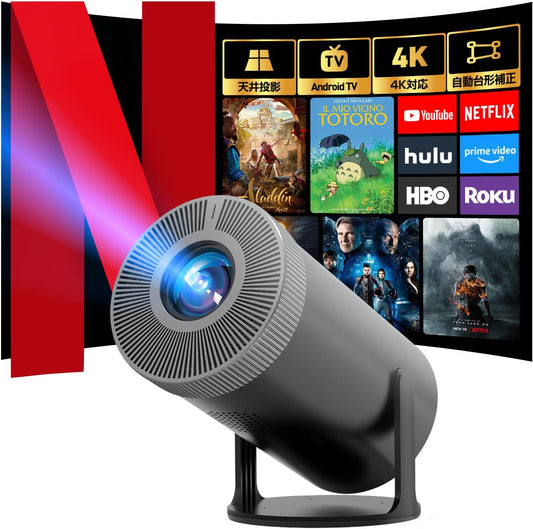
This article scientifically compares the "impact on eyes" of Aestiquo projectors (such as the popular model P1 Projector) and TVs, and provides a detailed explanation of proper usage.
1. 3 Common Causes of Eye Strain
Ophthalmologist's View: "The main causes of eye strain from displays are: ① high brightness, ② unbalanced contrast, and ③ flicker."
① Difference Between Screen Brightness and Ambient Light
If there is a large difference between screen brightness and room brightness, your eyes will tire from constantly adapting to the light and dark.
② Flicker and Blue Light
"Flicker" causes brain fatigue, and "blue light" can disrupt your sleep rhythm.
③ Viewing Time and Blinking Frequency
During video viewing, the frequency of blinking decreases to about 1/3 of normal, making dry eyes more likely.
2. Projector vs. TV: Scientific Comparison Table
| Comparison Item | Aestiquo P1 Projector | TV (55-inch 4K) | Eye Strain |
|---|---|---|---|
| Surface Brightness (per unit area) | 100–200 cd/m² | 300–500 cd/m² | Projector has lower brightness, less strain |
| Nature of Light | Indirect light reflected off walls/screen | Direct light from backlight | Indirect light is gentler on the retina |
| Blue Light Amount | Moderate (built-in reduction mode) | High (built-in reduction mode) | Generally less with projectors, depending on settings |
| Viewing Angle / Eye Movement | Wide screen allows more eye movement | Medium screen tends to fix gaze | More eye movement can also tire eye muscles |
Key Point: Low surface brightness and indirect light are significant advantages of projectors. The Aestiquo P1, in particular, features an "eye protection mode" that automatically adjusts brightness and reduces blue light.
3. 3 Cases Where Projectors May Be Disadvantageous
① Use in a Bright Room
If brightness is not increased, images become difficult to see, increasing eye strain.
② Large Screen Projection in a Small Room
The recommended viewing distance is 1.5 to 2.5 times the screen's diagonal.
③ Use of Low-Quality Projectors
Low-resolution, out-of-focus images significantly increase eye fatigue.
4. 7 Rules for Eye-Friendly Usage
- Adjust ambient brightness: Minimize the difference between screen brightness and room brightness
- Choose appropriate viewing distance and screen size: 1.5 to 2.5 times the diagonal for projectors, 3 to 5 times for TVs
- Use eye-friendly display settings: Utilize P1's "eye protection mode" or TV's "eco mode"
- Follow the 20-20-20 rule: After 20 minutes of viewing, take a 20-second break and look at something 6 meters (20 feet) or more away
- Keep the screen clean: Dirt on the lens blurs focus and increases eye fatigue
- Maintain proper indoor humidity: 40-60% humidity helps prevent dry eyes
- Reduce blue light before bedtime: Use "warm color mode" or "night filter"
5. Special Considerations for Children's Eyes
Recommended Viewing Time (Japanese Pediatric Society guidelines)
・Ages 3 and under: 0 minutes / ・Ages 3-6: within 30 minutes per day / ・Elementary school age: within 1 hour per day / ・Junior high school age and older: within 2 hours per day
For brightness and blue light settings for children, please refer to our FAQ page.
6. Summary: Use Wisely According to the Situation
Conclusion: When properly set up and configured, a projector is generally gentler on the eyes than a TV. However, in bright rooms or with low-quality models, a TV might be more suitable.
The Aestiquo P1 projector is equipped with many features that create an eye-friendly viewing environment, such as eye protection mode, automatic keystone correction, and auto-focus. Enjoy a more comfortable and safe home theater experience in your home.

7. Frequently Asked Questions (FAQ)
Q. Can projectors prevent myopia?
Q. Are blue light blocking glasses effective?
Q. Do blurry projector images cause eye strain?
Q. Are OLED TVs gentler on the eyes than LCD TVs?
Aestiquo Official Support: Contact Form (Mon-Fri 10:00-18:00) | Product Information: Aestiquo P1 Projector